High energy costs put demand reduction back on EU agenda despite stable supplies
Share this page
By Rosita Zilli, Policy Director, and Clara Vullo, Policy Officer
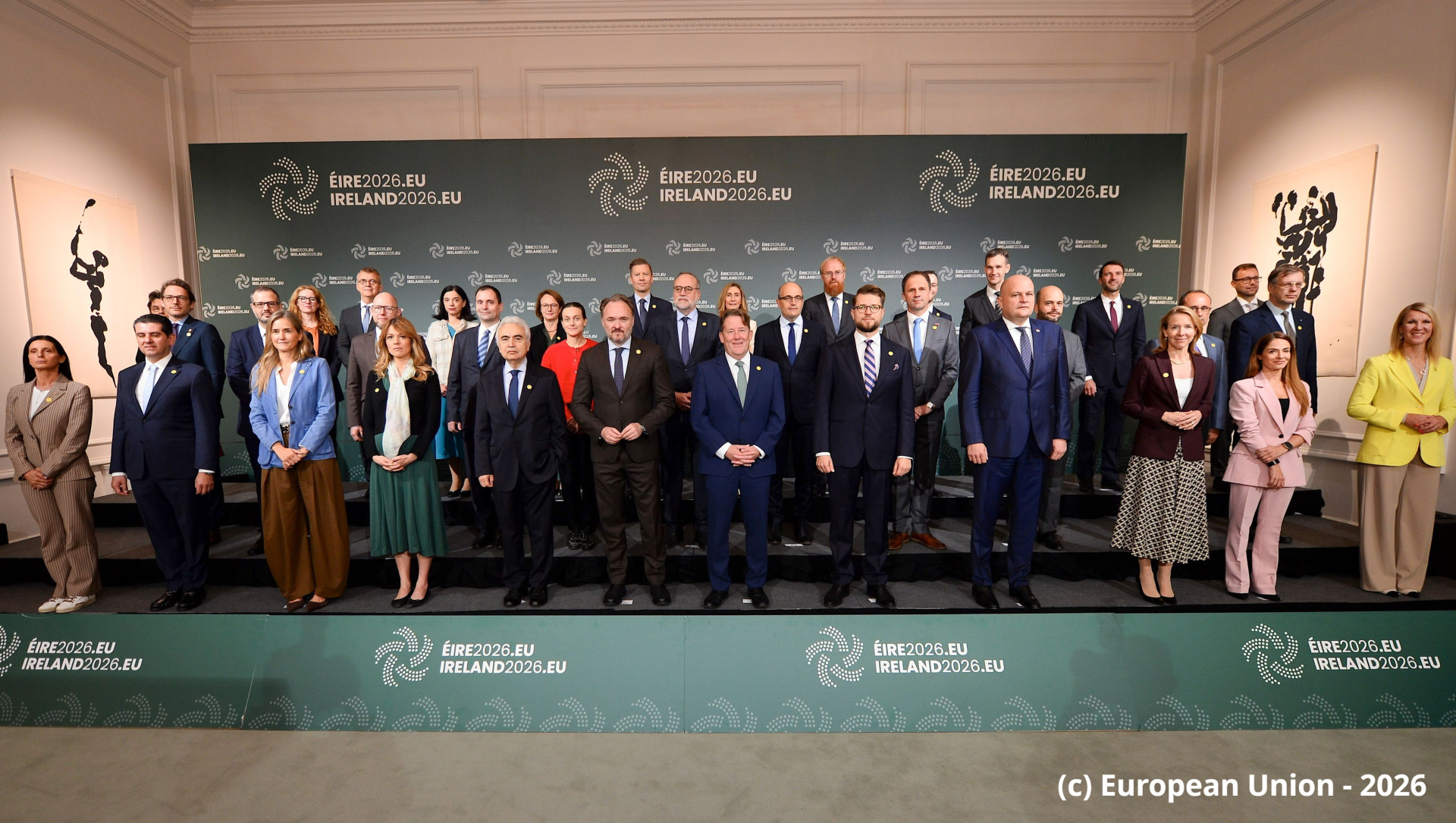
Europe is entering the winter with stable energy supplies for now, but at a considerably higher cost, prompting the European Commission to put demand reduction back on the policy agenda. Meeting informally in Dublin on 29 September, EU energy ministers discussed how to contain the impact of high energy costs on households and industry amid the continuing US-Iran conflict and disruption to global energy markets. At the meeting, EU Energy Commissioner Dan Jørgensen warned that Europe remains in an “energy price crisis”, with potentially “very high” prices this winter, putting further pressure on European industry and increasing energy poverty across the EU. This comes despite Europe being better protected against physical shortages than during the 2022 energy crisis triggered by Russia’s invasion of Ukraine and the subsequent disruption of Russian gas supplies.
The challenge is that sufficient supply does not necessarily mean affordable energy. Since the outbreak of the US-Iran conflict in February, the EU has spent more than €100 billion extra on energy imports as global prices have risen sharply. The effect is particularly visible for oil: in the second quarter of 2026, the value of EU petroleum oil imports was almost 56% higher than the 2025 monthly average, while imported volumes increased by just 1.2%. EU gas storage is also lower than last year, at around 70% in late September, some 12 percentage points below the same period in 2025. Nevertheless, the Gas Coordination Group, bringing together the Commission and Member State experts to monitor gas security of supply, confirmed on 25 September that supplies remain stable. Four days later, the Oil Coordination Group, its counterpart for oil, reached a similar assessment. Emergency oil stocks remain high, but tight global markets are driving particularly high prices for diesel and jet fuel.
Against this backdrop, Jørgensen called on Member States ahead of the Dublin meeting to consider measures to continue filling gas storage or reduce gas and electricity demand for as long as necessary, with demand reduction seen as a way of easing pressure on prices. At the meeting, governments also discussed tax reductions and financial support for households and businesses to cushion the impact of high prices. Some Member States called for an EU-level windfall tax on exceptional energy-company profits, while the Commission maintained that such decisions remain a national responsibility. Jørgensen and the Irish Presidency stressed that national price interventions should remain targeted and temporary, both to maintain incentives to save energy and to avoid distortions within the Single Market. The Commission also announced its intention to seek a one-year postponement of key import requirements under the EU Methane Regulation amid concerns over their potential impact on energy supplies (see article below).
The discussions also looked at longer-term ways to reduce Europe’s exposure to volatile global fossil-fuel markets. Ministers pointed to Europe’s dependence on imported fossil fuels as the underlying source of its exposure to global price shocks, and discussed innovation, faster deployment of renewables, electrification and stronger grids as ways of bringing down energy costs and reducing external dependencies. The current price shock therefore adds urgency to an existing EU policy direction, bringing the links between the clean energy transition, affordability, competitiveness and energy security into sharper focus.
Diesel markets have meanwhile added a further geopolitical dimension. Amid tight global supplies and soaring prices, on 1 October the US pressed France and Germany to draw on their emergency diesel stocks to increase supply and ease global prices, while raising the prospect of restricting US diesel exports if they failed to act. For Europe, this created a dilemma between using emergency stocks to alleviate current price pressures and preserving them against a possible deterioration in supply conditions. The immediate dispute eased on 2 October, when G7 countries agreed to complete their outstanding commitments through the coordinated release of 100 million barrels of emergency oil stocks over the following four months, including a substantial release of diesel to be frontloaded in the first 20 days, while committing to refrain from energy export restrictions between G7 countries.
For EERA, the renewed focus on affordability, energy security and dependence on imported fossil fuels reinforces the role of research and innovation in developing the technologies and energy systems needed to reduce these vulnerabilities. The debate also provides a timely backdrop to EERA’s High-Level Policy Conference on 14 October, “Europe’s triple challenge, one answer: Research-driven clean energy transition for decarbonisation, security and competitiveness”, which will provide a platform for dialogue between policymakers, researchers, industry and think tanks on how research and innovation can support Europe in addressing these interconnected priorities.
Login as an EERA member
In case you are an EERA member and don’t have login details, please contact secretariat@eera-set.eu
Join EERA
You are not an EERA member yet? Then you are missing out on a lot!
EERA gathers the best energy researchers and infrastructures in the whole of Europe
EERA makes your voice heard in the political discussions at the European level
EERA offers great networking opportunities with peers from your discipline - and others