EU budget deadlock leaves research funding in the balance as debate over FP10 Pillar 2 intensifies
Share this page
By Rosita Zilli, Policy Director, and Clara Vullo, Policy Officer
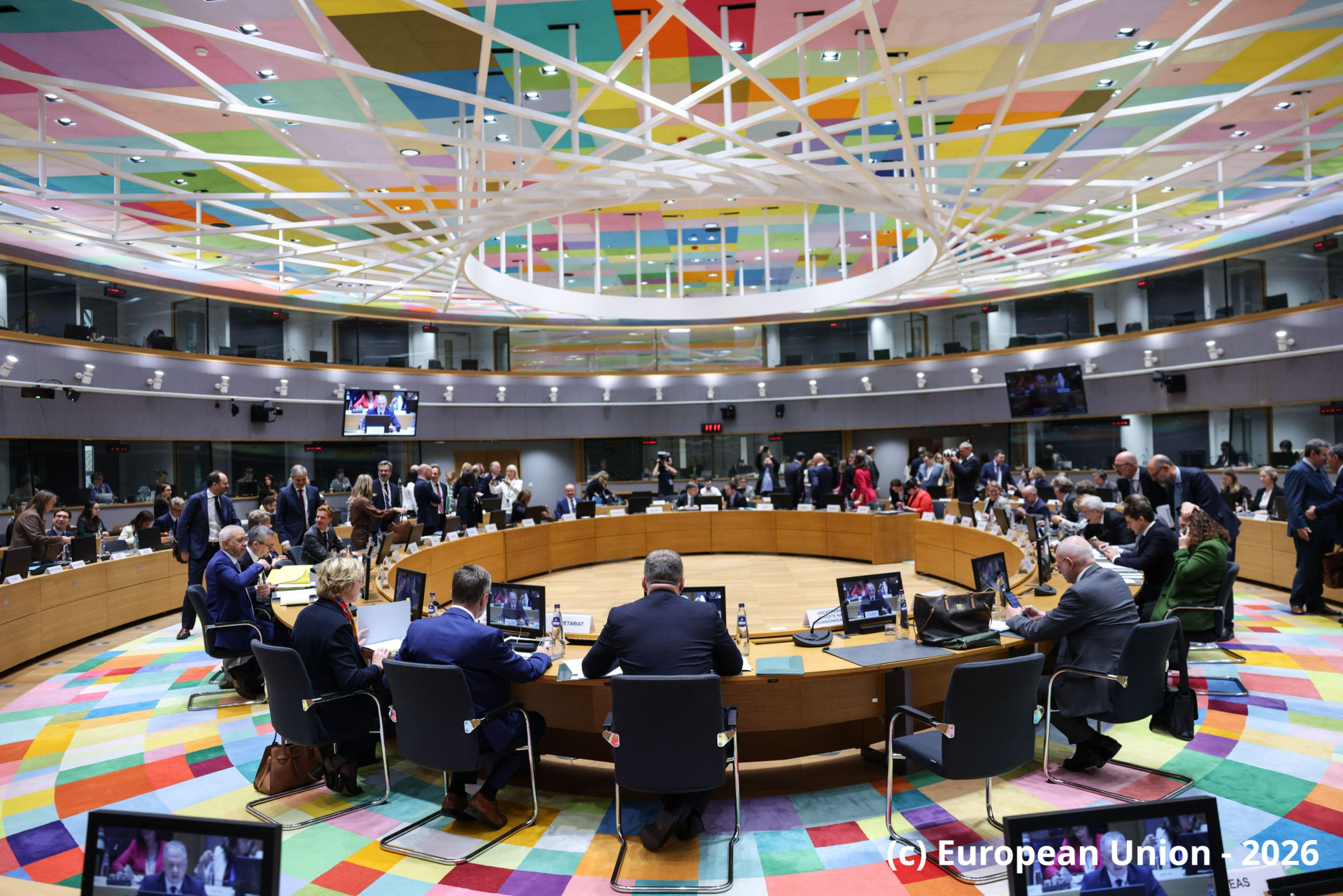
The future budget for EU research and innovation remains caught in the wider negotiations over the 2028–2034 Multiannual Financial Framework (MFF), after EU affairs ministers met in the General Affairs Council on 22 September with significant differences among Member States still unresolved. Until the overall size and financing of the next EU budget are agreed, uncertainty will remain over the resources ultimately available for FP10 and other European R&I programmes.
Divisions among Member States concern both the size of the future budget and the priorities it should accommodate. Germany, Denmark, the Netherlands, Austria and Finland have set out a joint position calling for budgetary restraint, while arguing that spending should focus more strongly on areas including competitiveness, innovation and security. Spain, by contrast, has argued for a larger and more ambitious common budget. The tension is clear: competing priorities are placing increasing demands on the EU budget, from competitiveness and security to the green and digital transitions, while several Member States want to keep both the overall budget and national contributions under control.
This makes the revenue side of the equation increasingly important. In her State of the Union address last week, Commission President Ursula von der Leyen reiterated that “any modern budget needs new own resources”, referring to additional sources of EU revenue that would reduce the pressure on national contributions. The Commission’s proposal for the next MFF includes new sources of revenue expected to generate around €58 billion annually, building in part on earlier proposals to channel revenues from the Emissions Trading System (ETS) and the Carbon Border Adjustment Mechanism (CBAM) to the EU budget.
For the future of European research and innovation, the implications are significant. European Parliament MFF co-rapporteur Siegfried Mureșan has warned that without additional EU revenues it will be difficult to secure the level of funding sought for programmes such as FP10 and the European Competitiveness Fund (ECF). He also warned that, if the overall budget is squeezed, Member States may be more inclined to protect funding allocated directly to them than programmes such as Horizon Europe, where funding is awarded competitively at European level. Parliament’s ambition for a €200 billion FP10 could therefore become harder to achieve as the wider MFF negotiations tighten.
The next political milestones come quickly. The General Affairs Council will return to the MFF on 13 October, ahead of the European Council on 15 October, where EU leaders are expected to discuss a revised negotiating box — the document bringing together the issues requiring political direction and compromise from EU leaders. The objective is to reach a political agreement before the end of 2026, leaving 2027 for the formal adoption of the MFF and the individual programmes before the new financial period starts in January 2028. This is an ambitious timetable: the MFF requires unanimity among Member States, while the own resources decision is subject to the same requirement, followed by approval according to national constitutional requirements.
Alongside the budget negotiations, the design of FP10 itself is still being shaped. The Council reached a partial negotiating position on key elements of the future Horizon Europe and European Competitiveness Fund in June, while leaving financial and horizontal questions to the wider MFF negotiations. In the European Parliament, a vote in the Industry, Research and Energy Committee (ITRE), originally planned for 10 September, was postponed as Parliament works to reach agreement on the Performance Framework Regulation, which will establish common spending rules for programmes under the next MFF. The ITRE vote on FP10 is now expected on 10 November.
Within these negotiations, the governance of FP10’s Pillar 2 is currently under particular scrutiny. Christian Ehler, Parliament’s lead rapporteur on the Horizon Europe Framework Programme, originally proposed two expert councils — one focused on competitiveness and another on societal challenges — intended to bring scientific and technological expertise into the definition of research priorities and the preparation of future calls. The Commission has opposed the model on the grounds that it risks adding complexity and coordination costs, while negotiations within Parliament have also raised questions over the councils’ powers, accountability, potential conflicts of interest and geographical balance. The latest compromise under discussion reportedly replaces the two councils with a single expert body, accompanied by stronger safeguards on transparency, conflicts of interest and Commission oversight. Negotiations are continuing over how far such a body should be involved in shaping FP10 priorities and calls.
A new element has now entered the Pillar 2 discussion, with MEPs considering whether the programme should make more room for longer-term, bottom-up research. The proposed “sectoral plans” would allow groups of research institutions to compete for longer-term funding to pursue research agendas they define themselves, rather than working exclusively through conventional calls with more narrowly prescribed topics. Initially proposed under Pillar 1, the plans are now likely to move to Pillar 2, with René Repasi, Parliament’s lead rapporteur on the Horizon Europe Specific Programme, pointing to budget constraints in Pillar 1 as the main reason for the shift. The idea is still taking shape, including how such funding would relate to existing collaborative instruments and how to ensure that European funding complements rather than replaces national support for research institutions.
For EERA, these evolving negotiations touch directly on several priorities it has been advocating throughout the FP10 debate. Having called for an FP10 budget of €200–220 billion, EERA will continue to advocate a level of funding commensurate with this ambition, including in the wider MFF negotiations that will ultimately determine the resources available for the programme.
The ongoing discussions on Pillar 2 governance are equally relevant. EERA has consistently called for greater involvement of research communities in shaping European R&I priorities, a strong role for collaborative research and an FP10 that builds on Europe’s existing R&I ecosystems. In its reaction to the Ehler Report in April, EERA welcomed the objective of bringing greater scientific and technological expertise into FP10 governance, but questioned whether new expert councils were the best mechanism to achieve it, emphasising instead co-creation and effective engagement with existing research communities. The emerging discussion on sectoral plans will also be important to follow closely as the proposal develops, particularly for its potential implications for pan-European research communities and longer-term collaborative research agendas.
As the negotiations advance, EERA will continue to advocate its broader priorities for FP10, including an ambitious budget, a strong collaborative dimension and meaningful involvement of Europe’s research communities in shaping and implementing research priorities. The final shape of the programme will matter well beyond the research community itself. At a time when Europe is seeking to strengthen its competitiveness, security and capacity to decarbonise in an increasingly contested geopolitical and technological landscape, the choices made on FP10 will ultimately show whether Europe is prepared to invest in the research and innovation needed to underpin all three ambitions, turning them into reality.
Login as an EERA member
In case you are an EERA member and don’t have login details, please contact secretariat@eera-set.eu
Join EERA
You are not an EERA member yet? Then you are missing out on a lot!
EERA gathers the best energy researchers and infrastructures in the whole of Europe
EERA makes your voice heard in the political discussions at the European level
EERA offers great networking opportunities with peers from your discipline - and others