After a summer of extremes, EU Climate Commissioner calls for resilience investment alongside sustained mitigation
Share this page
by Rosita Zilli, Policy Director, and Clara Vullo, Policy Office
Severe heatwaves, wildfires and floods over the summer have highlighted the growing human, environmental and economic impacts of climate change. Wildfires burned an area of Europe twice the size of Luxembourg, with Spain and France among the countries most affected. At least 14 first responders lost their lives, while economic damage is estimated at between €50 billion and €70 billion or more. At the global level, one of the most devastating events occurred along the Nepal–Tibet border, where catastrophic flooding triggered by the collapse of a glacier–rock mass reportedly left more than 1,000 people dead and thousands missing, destroying homes and livelihoods. Extensive damage to electricity infrastructure and hydropower facilities also exposed the vulnerability of energy assets to climate-related hazards.
Against this backdrop, the UN Environment Programme report Limiting Overshoot – Navigating exceedance of 1.5°C and pathways towards return, published on 2 September, finds that exceeding the Paris Agreement’s 1.5°C threshold is now widely considered unavoidable under current policies. The report notes that the magnitude and duration of the overshoot will depend on future emissions trajectories, as will the possibility of eventually returning global temperatures below 1.5°C. It consequently stresses that adaptation to increasing climate impacts must proceed alongside deep near-term emissions reductions, the transition to net zero and, ultimately, sustained net-negative emissions.
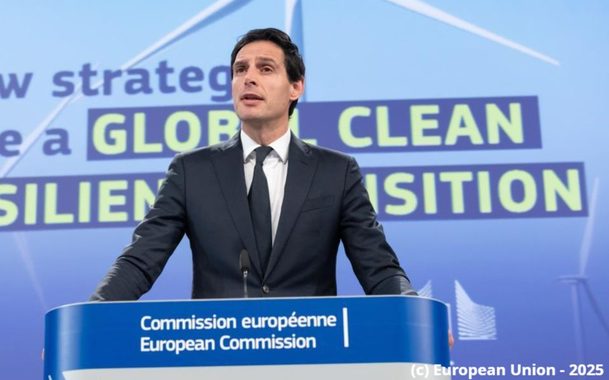
This dual emphasis on mitigation and resilience is also reflected in the EU debate. In an interview published on 31 August, Climate Commissioner Wopke Hoekstra made the case that investing before disasters occur is less costly than repeatedly repairing the resulting damage. He called for infrastructure to be designed or rebuilt for future climatic conditions and underlined that climate action and competitiveness should be pursued together, linking the green transition to greater European economic and energy independence. These arguments are particularly relevant as negotiations continue on the EU’s next long-term budget.
Adding a concrete financing proposal to this debate, on 4 September Spain called for a dedicated EU climate-adaptation fund and binding adaptation targets. Its proposals include five-year climate-risk assessments, the integration of climate risks into infrastructure planning and targets for sectors including water, health and agriculture. The initiative provides an early contribution to the European Climate Adaptation Plan, due later in 2026, while negotiations on the EU’s 2028–2034 budget will help determine the resources available for future adaptation measures.
Against this background, the low-carbon energy R&I community brought together within EERA stands ready to contribute scientific evidence, expertise and solutions to advancing climate mitigation and strengthening the resilience of Europe’s energy systems and infrastructure.
Login as an EERA member
In case you are an EERA member and don’t have login details, please contact secretariat@eera-set.eu
Join EERA
You are not an EERA member yet? Then you are missing out on a lot!
EERA gathers the best energy researchers and infrastructures in the whole of Europe
EERA makes your voice heard in the political discussions at the European level
EERA offers great networking opportunities with peers from your discipline - and others