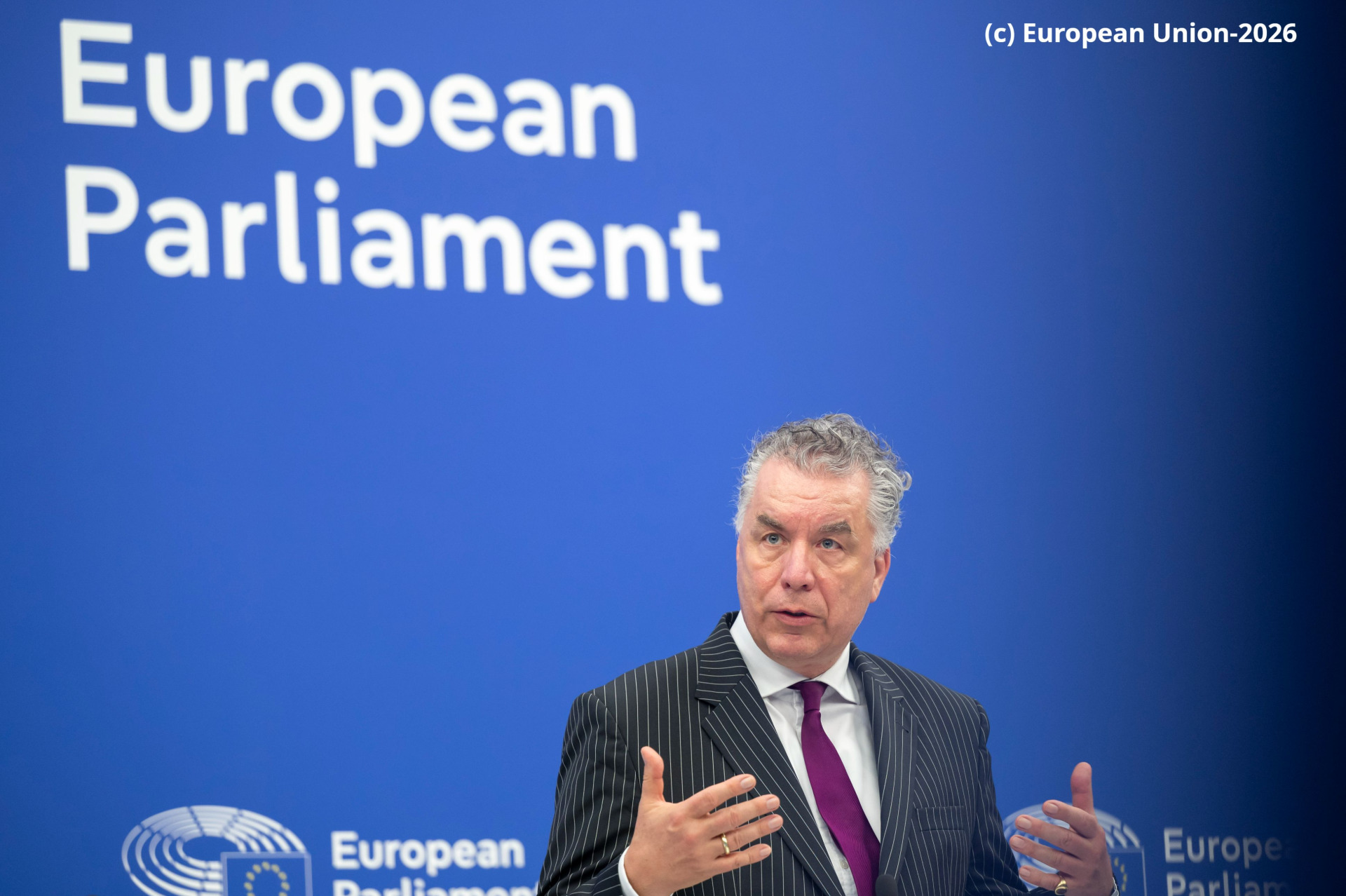
European Parliament FP10 compromise takes shape as proposed Council budget cuts face mounting criticism
Share this page
By Rosita Zilli, Policy Director, and Clara Vullo, Policy Officer
On 30 October, European Parliament rapporteurs Christian Ehler (EPP) and René Repasi (S&D) released the compromise texts on the next Framework Programme for Research and Innovation (FP10) and its Specific Programme. Agreed with shadow rapporteurs from across the political groups, the texts introduce substantial changes to the draft reports published in March, notably on research governance, European Partnerships and widening participation. The Parliament's Industry, Research and Energy (ITRE) Committee is scheduled to vote on 10 November, ahead of further parliamentary consideration later in the month. The texts have yet to be formally adopted as Parliament's negotiating position, with a vote on the matter expected at the Parliament’s plenary during the week beginning 23 November.
On the budget, the agreement reiterates the call for €200 billion for FP10, compared with the Commission's €175 billion proposal and the €158 billion envisaged in the Irish Council Presidency's latest negotiating proposal. It also introduces safeguards to protect Horizon Europe's financial autonomy, including separate budget lines, restrictions on transfers and greater expenditure traceability. On European Partnerships, the text proposes a maximum of 35 operating simultaneously, compared with around 60 under the current programme and the substantially smaller portfolios envisaged in the Commission's planning scenarios.
Governance of Pillar II, covering collaborative research and innovation, remains one of the most consequential changes. The March drafts had proposed two expert councils with considerable decision-making powers over research priorities. Following concerns among MEPs about accountability and institutional control, the revised model establishes a single High-Level Council of at least 30 experts, appointed by the Commission for up to four years and subject to scrutiny by Parliament and the Council of the EU. This body would advise on thematic priorities and the appointment of Lead Experts responsible for preparing and monitoring calls under individual work programmes. Member States, through programme committees, would retain their role in approving work programmes.
Other changes concern the proposed Sectoral Plans, now envisaged as a pilot initiative focused on social sciences and humanities and funded through Pillar II rather than the European Research Council. The agreement also redesigns Moonshots around bottom-up calls, with women's health, the human exposome and the quantum internet among the potential areas identified.
On widening participation, the text retains the distinction between widening and transition countries but links eligibility to integration in the European Research Area, rather than the European Innovation Scoreboard. From 2030, access to certain capacity-building measures would be linked to increases in national public R&D expenditure, subject to possible exceptions. It also introduces ERA Excellence grants. On dual-use research, the proposed provisions maintain Horizon Europe's civilian orientation while recognising that research results may subsequently acquire defence applications. For international cooperation, they introduce additional safeguards concerning academic freedom and research security, alongside a new trusted partner status allowing designated associated countries greater access to sensitive technology areas.
Meanwhile, the battle over FP10 funding is intensifying. In a paper published on 2 November, Manuel Heitor, former chair of the Commission's independent expert group on the future of Horizon Europe, criticised the Irish Presidency's proposed reduction to €158 billion, warning that cuts to collaborative research would undermine Europe's competitiveness ambitions and long-term growth. Parliament's rapporteurs are also taking their case directly to national governments. In early November, Ehler and Repasi travelled to Berlin, where they met representatives of both governing coalition parties, including the Chancellor's office, to argue against disproportionate cuts to Horizon Europe. They also defended the programme's independence from the European Competitiveness Fund (ECF), stressing the need to preserve its distinct research mission. The German research ministry did not commit to safeguarding the proposed allocation, despite having publicly criticised the Presidency's reductions. The future FP10 budget remains closely tied to negotiations on the 2028–2034 Multiannual Financial Framework, which will determine the overall financial envelope available for EU research and innovation.
Against this backdrop, EERA has published its updated FP10 position paper, building on its sustained engagement in the debate and focusing its recommendations on what matters most for Europe's energy research community: ensuring that the next Horizon Europe programme matches the scale of Europe's energy ambitions with the research investment needed to deliver them.
Login as an EERA member
In case you are an EERA member and don’t have login details, please contact secretariat@eera-set.eu
Join EERA
You are not an EERA member yet? Then you are missing out on a lot!
EERA gathers the best energy researchers and infrastructures in the whole of Europe
EERA makes your voice heard in the political discussions at the European level
EERA offers great networking opportunities with peers from your discipline - and others