Europe’s energy crisis puts joint purchasing in focus as shift from fossil fuels remains key to long-term security
Share this page
By Rosita Zilli, Policy Director, and Clara Vullo, Policy Officer
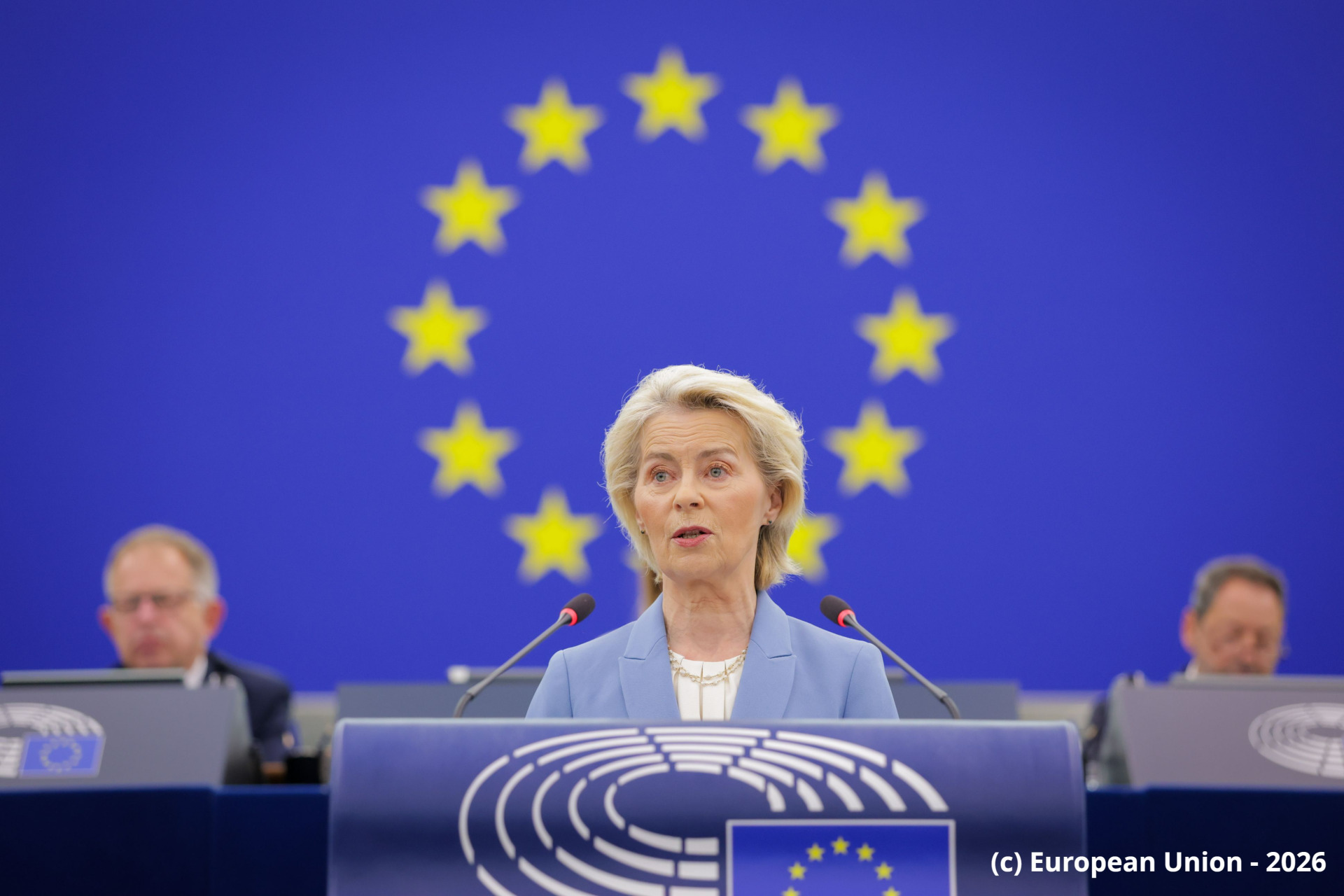
The energy crisis triggered by the war in Iran and disruptions around the Strait of Hormuz continues to weigh heavily on European energy prices and exacerbate longstanding concerns over security of supply. As EU and international efforts to ease immediate market pressures continue, the turmoil is once again highlighting Europe's vulnerability to imported fossil fuels. Addressing the European Parliament during its Strasbourg plenary session on 6 October, ahead of the European Council meeting of 15–16 October, Commission President Ursula von der Leyen recalled the scale of the shock. Since the end of February, gas prices had risen by 140%, diesel prices had doubled and Europe's fossil fuel import bill had increased by €100 billion, without any corresponding increase in energy supplies. The additional costs are weighing on households and industry at a time when Europe's competitiveness is already under pressure, particularly in relation to the United States and China.
Against this backdrop, the Commission announced plans to launch a task force to aggregate European energy demand, with a view to entrusting a market operator with joint energy procurement. The initiative builds on the experience of the EU Energy Platform, established in 2022 under REPowerEU in response to the energy crisis following Russia's invasion of Ukraine, followed by AggregateEU in 2023 and the EU Energy and Raw Materials Platform in 2025. Unlike these earlier mechanisms, which primarily aggregate demand and connect buyers with suppliers, the proposed approach would allow joint purchases to be carried out through a designated operator. By addressing the fragmentation of European energy demand across Member States with different energy mixes, the initiative aims to strengthen their collective bargaining position and secure more favourable supply conditions. The mechanism could also extend beyond gas, although its precise scope, governance and operational arrangements remain to be defined.
Recognising that Member States face different pressures, the Commission is also seeking to give national governments greater flexibility to cushion the impact of high energy prices. While von der Leyen reiterated the recommendation to prioritise targeted support for the households and businesses most affected, rather than costly blanket subsidies, she also confirmed plans to prolong the temporary State aid framework introduced in April for industries particularly exposed to the energy price shock. She further announced a strategic dialogue with European refineries, jointly chaired by Energy Commissioner Dan Jørgensen and Defence Commissioner Andrius Kubilius, to examine ways of containing refining costs and safeguarding the availability of petroleum products, including those needed for defence.
Looking beyond immediate crisis management, von der Leyen reaffirmed the central role of the clean energy transition in reducing Europe's structural dependence on imported fossil fuels. Revisiting priorities outlined in her September State of the Union address, she stressed the need to expand domestic clean electricity production, strengthen electricity networks and accelerate electrification across the economy. She also recalled that, in 2025, wind and solar generated more electricity in Europe than all fossil fuels combined for the first time. Yet grid bottlenecks remain a major obstacle: while more than 80 GW of renewable capacity was installed in 2025, approximately six times as much capacity is still awaiting connection. She therefore urged the European Parliament and Council to conclude negotiations on the European Grids Package, presented in December 2025, by the end of 2026, to accelerate grid development and facilitate the integration of new renewable generation. The Commission's Electrification Action Plan, presented in July, forms part of the same strategy, setting an indicative target of increasing electricity's share of final energy consumption to 46% by 2040, subject to further assessment, with potential annual savings of €260 billion in fossil fuel imports.
The need to sustain these ambitions also featured in von der Leyen's remarks on the next EU long-term budget. Referring to the proposed 2028–2034 Multiannual Financial Framework, currently under negotiation, she explicitly identified research and innovation among the strategic areas requiring greater investment and warned against substantial cuts to the Commission's proposal. The remarks reinforce the relevance of R&I to Europe's broader security and competitiveness priorities, although the future allocation of EU funding remains subject to negotiation.
Meanwhile, international efforts to stabilise oil markets are gathering pace, alongside preparations to safeguard European gas supplies ahead of winter. Following the G7 announcement on 2 October concerning 100 million barrels of emergency oil reserves, the International Energy Agency (IEA) clarified on 7 October that governments were accelerating implementation of the collective stock release agreed in March, with priority given to diesel. Approximately 325 million barrels had already been released, with around 100 million still to be delivered under existing commitments. The acceleration could help ease near-term supply pressures, particularly in diesel markets, but largely concerns volumes already pledged rather than additional commitments. On 9 October, Germany announced plans to release up to 15 million barrels. EU Member States have also expressed caution over further drawdowns beyond the commitments agreed in March, pending a clearer assessment of market conditions and potential future supply risks.
On gas, the EU Gas Coordination Group welcomed ENTSOG's Winter Supply Outlook on 8 October, indicating that the European gas system should be able to meet winter demand despite lower storage levels. This provides some reassurance regarding physical supply security, although concerns over high prices persist. Attention now turns to the IEA's forthcoming review of oil market conditions and the European Council on 15–16 October, where the wider EU response to the crisis is expected to be discussed.
The ongoing energy crisis once again highlights the limits of emergency measures in addressing Europe's exposure to volatile international fossil fuel markets. EERA will continue to advocate a swift and steady clean energy transition as the most reliable route to reducing external dependencies and strengthening energy security, underpinned by sustained investment in research and innovation as an essential driver of this transformation.
Login as an EERA member
In case you are an EERA member and don’t have login details, please contact secretariat@eera-set.eu
Join EERA
You are not an EERA member yet? Then you are missing out on a lot!
EERA gathers the best energy researchers and infrastructures in the whole of Europe
EERA makes your voice heard in the political discussions at the European level
EERA offers great networking opportunities with peers from your discipline - and others