US moves to isolate Iran as EU confronts energy price shock
Share this page
by Rosita Zilli, Policy Director, and Clara Vullo, Policy Office
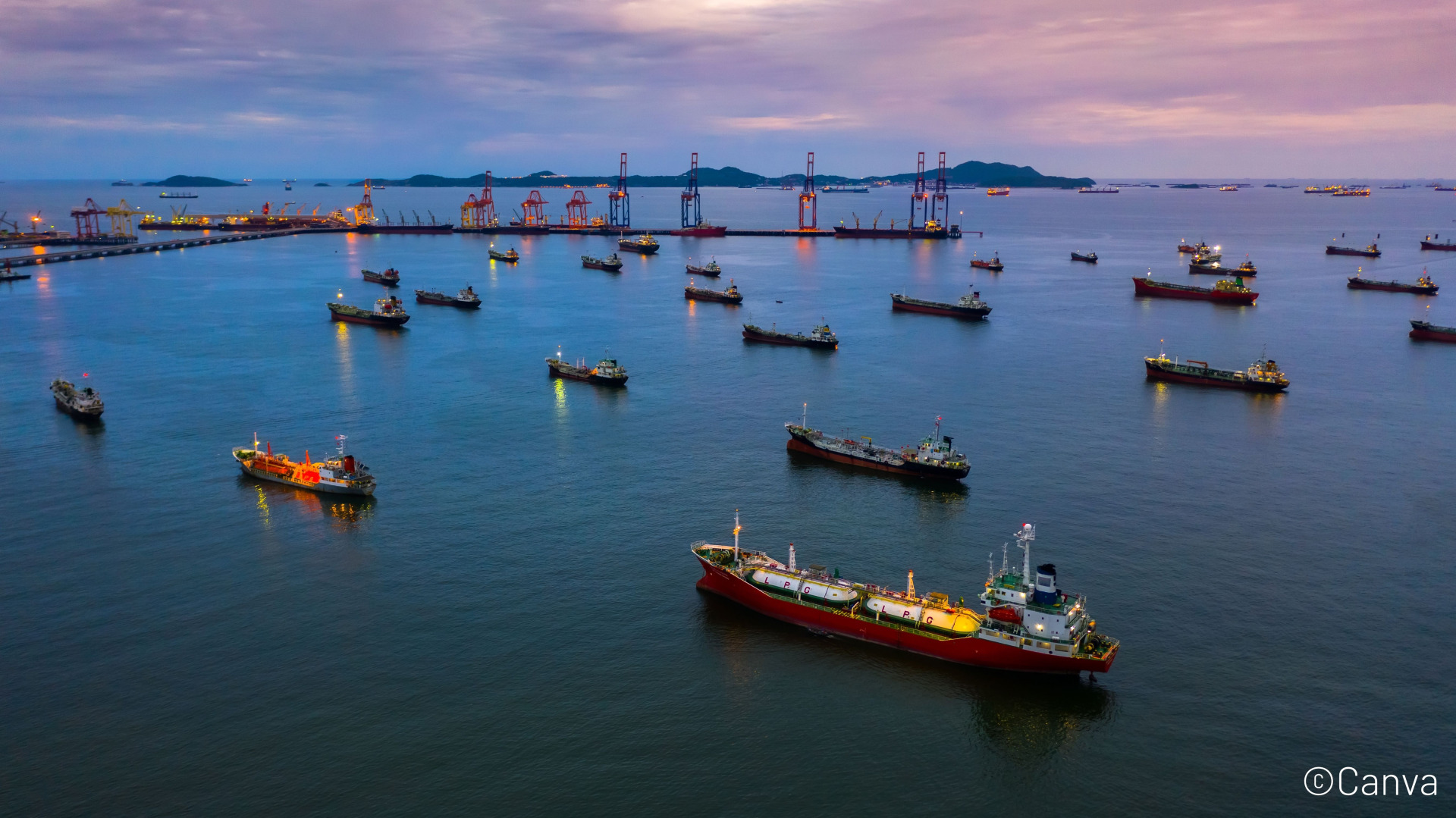
The United States has intensified its efforts to isolate Iran economically as the six-month war continues to expose the vulnerability of international energy markets. On 24 August, US Treasury Secretary Scott Bessent announced an “economic onslaught against Iran’s financial connections around the globe”, as the Trump administration seeks to force an end to the conflict. Under “Operation Economic Outcast”, countries, banks and businesses maintaining financial ties with Iran risk economic isolation. Iran responded by threatening to halt regional oil exports if the war continued and again warned ships not to cross the Strait of Hormuz without permission.
The economic repercussions are already substantial worldwide, including in Europe. On 26 August, the Centre for Research on Energy and Clean Air (CREA), a research organisation focused on energy and air pollution, reported that the war had caused the largest sustained energy-price shock since the 1990 Gulf War, adding $330 billion to global fossil-fuel import costs. China faced the largest additional bill, at $35.5 billion, while the Netherlands, Italy, France and Spain each incurred increases of between $10.3 billion and $13.5 billion from March to August 2026. CREA estimates that clean power capacity added since 2020 has nevertheless avoided $36 billion in additional imports.
The disruption of the Strait of Hormuz has also reshaped global gas flows. The International Gas Union’s 2026 Global Gas Report finds that the Strait’s closure disrupted around 20% of global liquefied natural gas trade, contributing to a 4% contraction between January and June. More than 80% of the demand shortfall was concentrated in Asia. The direct impact on Europe was limited, as Qatar accounted for only 3.6% of its gas supply in 2025, while strong renewable generation also constrained gas demand in the European and US power sectors.
For the EU, the crisis has raised concerns not only about fossil-fuel dependence but also about the functioning of petroleum markets. Commission Executive Vice-President Teresa Riberasaid on 25 August that the Commission had intensified its monitoring of refined-product markets for potential distortions. Although the European Central Bank reported near-record refining margins following the latest escalation in the Middle East, the Commission has so far found no evidence of anti-competitive practices. Ribera said it would launch an investigation should evidence emerge.
Political pressure for further intervention is nonetheless growing. Germany, Italy, Spain, Portugal, Austria and Poland have called for an EU-wide windfall tax on oil companies, arguing that profits from refined products have risen faster than crude oil prices. Their joint letter of 21 August asks the Irish Council Presidency to place the proposal on the agenda of the September meeting of EU finance ministers. The Commission has stated that Member States may impose such taxes in compliance with EU law.
The crisis is also feeding a broader debate over Europe’s long-term energy security. On 24 August, almost 200 European and international organisations, including civil society groups and industry associations, called on Commission President Ursula von der Leyen to launch an independent, science-based report aimed at making the current fossil-fuel crisis “Europe’s last”. Led by Climate Action Network Europe, a coalition of NGOs, the signatories argue that renewables, energy efficiency, grids and clean flexibility should underpin an exit from fossil-fuel dependence, supported by secure supply chains for critical materials.
In this context, EERA will continue to advocate a swift and steady clean transition as the most reliable route to greater energy security, reduced external dependencies and stronger competitiveness, with low-carbon energy research and innovation at its core.
Login as an EERA member
In case you are an EERA member and don’t have login details, please contact secretariat@eera-set.eu
Join EERA
You are not an EERA member yet? Then you are missing out on a lot!
EERA gathers the best energy researchers and infrastructures in the whole of Europe
EERA makes your voice heard in the political discussions at the European level
EERA offers great networking opportunities with peers from your discipline - and others