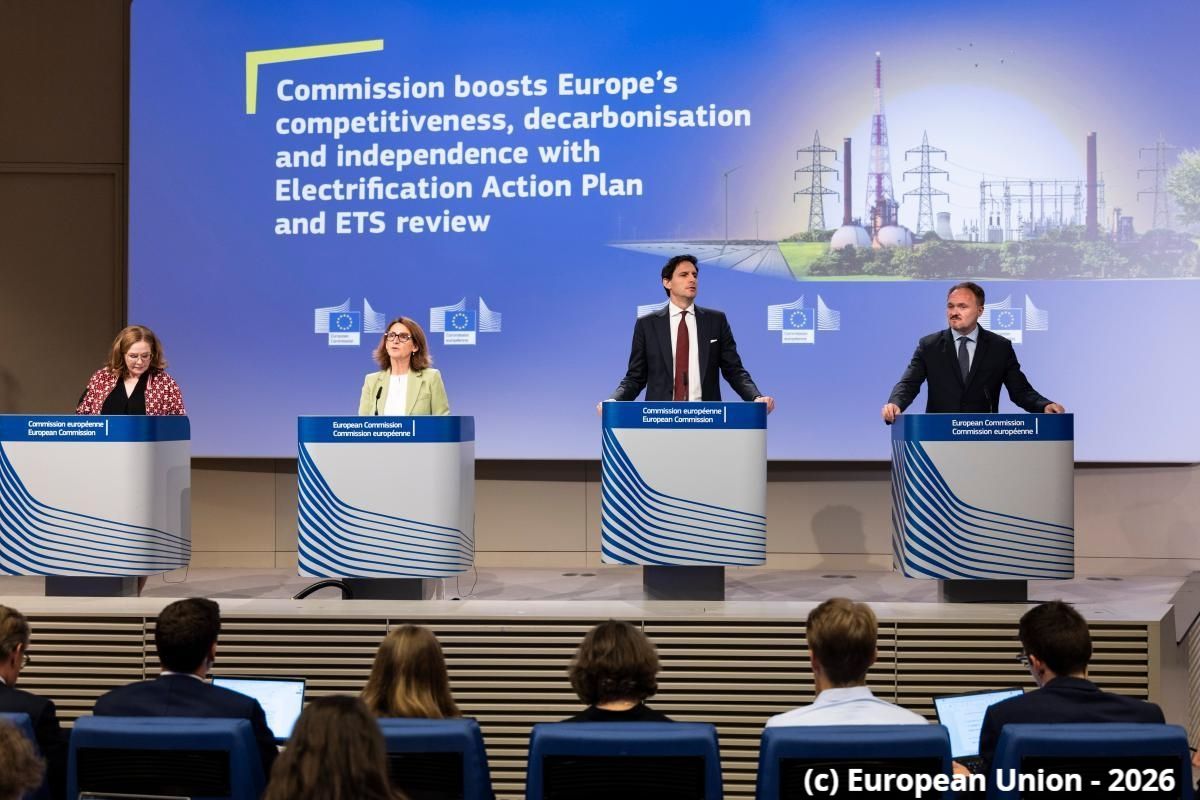
EU unveils Electrification Action Plan and ETS reforms in bid to balance climate ambition and industrial competitiveness
Share this page
by Rosita Zilli, Policy Director, and Clara Vullo, Policy Office
On 17 July, the European Commission presented the Electrification Action Plan alongside a proposal to reform the EU Emissions Trading System (ETS). Presented against a backdrop of growing concerns over Europe's competitiveness, persistently high energy costs and an increasingly challenging geopolitical environment, the two initiatives seek to advance the EU's decarbonisation objectives while supporting industrial competitiveness.
The Electrification Action Plansets an indicative target of increasing electricity's share of final energy consumption from around 23% today to 46% by 2040. To support this goal, it puts forward measures to modernise electricity grids, expand energy storage and system flexibility, accelerate smart charging and digitalisation, improve electricity price signals, and facilitate the uptake of electrification technologies such as electric vehicles and heat pumps. It also aims to mobilise additional public and private investment, including more than €75 billion from the European Investment Bank Group between 2026 and 2028.
Alongside the Action Plan, the Commission proposed targeted reforms to the EU ETS to align the carbon market with the EU's proposed 2040 climate target while addressing mounting concerns over industrial competitiveness and carbon leakage. The reforms revise the emissions reduction trajectory, extend free allocations for sectors exposed to international competition under stricter conditions, strengthen the link between free allocations and credible industrial decarbonisation plans, and expand the use of ETS revenues to support the transition. Headline measures include allocating at least 50% of future ETS auction revenues to decarbonisation projects and establishing a €100 billion Industrial Decarbonisation Bank, further reinforcing the investment dimension of the EU carbon market.
Taken together, the two initiatives illustrate an increasingly integrated approach to the clean energy transition, combining electrification, carbon pricing and investment measures to pursue both decarbonisation and industrial competitiveness. From EERA's perspective, this reinforces the importance of generating knowledge across the full energy value chain—from technology development to integrated energy systems—to support future policy and investment decisions. As negotiations on both initiatives begin, EERA will continue to contribute scientific evidence and research-based expertise to support evidence-informed policymaking.
Login as an EERA member
In case you are an EERA member and don’t have login details, please contact secretariat@eera-set.eu
Join EERA
You are not an EERA member yet? Then you are missing out on a lot!
EERA gathers the best energy researchers and infrastructures in the whole of Europe
EERA makes your voice heard in the political discussions at the European level
EERA offers great networking opportunities with peers from your discipline - and others