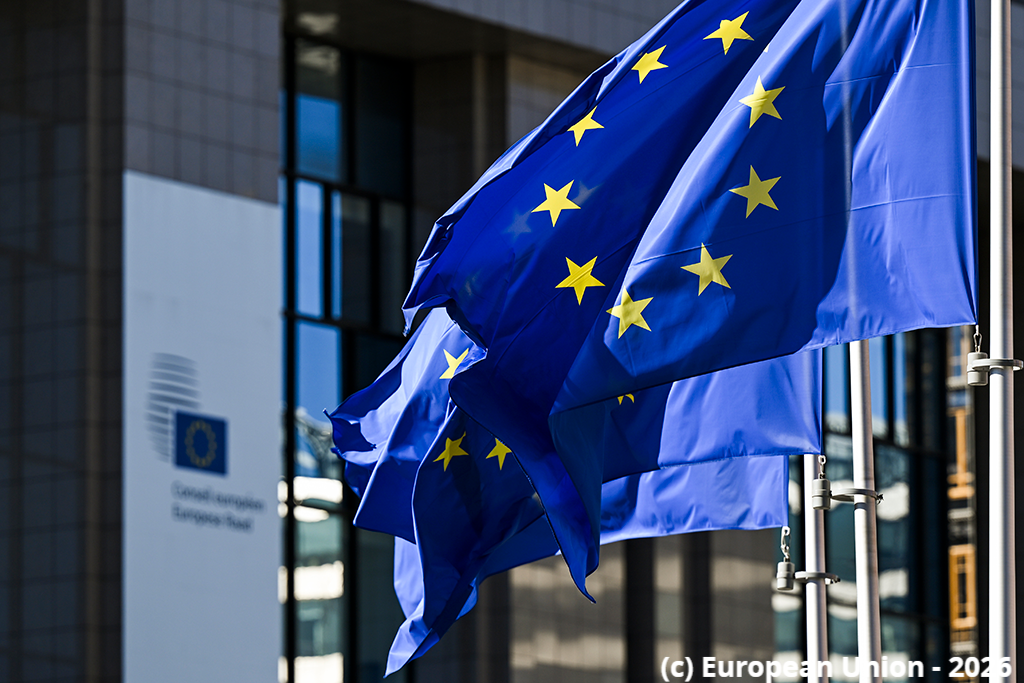
Council of the EU reaches partial position on European Competitiveness Fund, calling for a strong connection with FP10, and increased Member States involvement
Share this page
by Rosita Zilli, Policy Director,and Marianne Lazarovici, Policy Office
On 16 June, EU Member States adopted their partial negotiating position on the European Competitiveness Fund (ECF). As a reminder, the ECF is a new instrument, central to the EU’s next Multiannual Financial Framework for 2028-2034, that aims at simplifying EU funding – by bringing together 14 existing funding instruments – while boosting the EU’s competitiveness and accelerating the development of innovative technologies. The position is considered partial as it does not encompass financial and horizontal issues, which are still being negotiated in the broader MFF discussion.
Through its position, the Council of the EU notably clarifies synergies with other EU funds such as Horizon Europe, and proposes to strengthen the role of Member States in the governance of the fund, at all stages of the implementation cycle. For instance, their proposal would reinforce their involvement within the ECF General Committee, the advisory body governing the programme meeting at least once a year, and which determines the strategic direction and priorities of the ECF.
This proposal offers a strong parallel with the Member States’ draft position on Framework Programme 10 (FP10), in which they also intend to increase national influence through a Horizon Europe Strategic Committee. In particular, the ECF position details how common meetings between the Strategic Committee and the ECF’s General Committee would address issues related to collaborative R&I activities.
When it comes to the connection between the ECF and FP10, EU countries have sided with the European Commission over the European Parliament, opting for a single work programme tightly connecting the two instruments, over separate ones, as advocated for by the European Parliament. What’s more, Member States hint at the possibility to implement parts of the ECF budget through European Partnerships, further showcasing the ECF’s strong role in delivering on R&I priorities alongside FP10. However, the mechanisms defining the interaction between FP10 and the ECF are likely to remain a strong sticking point in future interinstitutional negotiations.
Indeed, Christian Ehler, the European Parliament’s lead rapporteur on Horizon Europe and co-rapporteur on the ECF, has renewed his call to establish two Councils – on European competitiveness, and on global societal challenges – led by independent experts, to oversee FP10. In his view, such a system would ensure the programme is less bureaucratic and more efficient, as civil servants can, on the contrary, lack the necessary expertise to design calls and work programmes.
Other contentious topics mentioned in the Council’s partial position notably include funding allocation and geographical disparities, with Member States calling for funding to be awarded by the Commission based on the quality of proposals alone, while keeping track of the geographical distribution of the money.
At this stage, the European Parliament’s Industry, Research and Energy (ITRE) committee is expected to vote on its positions on both FP10 and the ECF on 10 September, with both files to be put to a plenary vote later in the year, allowing for the start of interinstitutional negotiations with the Council. Currently, the objective would be to adopt all legislation next year, in 2027 to ensure that EU funding can reach beneficiaries without delay, from January 2028.
Throughout the process, EERA will continue to monitor and translate institutional and policy developments, while participating to ensure that the ECF and the next Framework Programme are as efficient as possible in promoting collaborative low-carbon energy research and innovation activities.
Login as an EERA member
In case you are an EERA member and don’t have login details, please contact secretariat@eera-set.eu
Join EERA
You are not an EERA member yet? Then you are missing out on a lot!
EERA gathers the best energy researchers and infrastructures in the whole of Europe
EERA makes your voice heard in the political discussions at the European level
EERA offers great networking opportunities with peers from your discipline - and others