New EU Commission recommendations to counter the energy crisis emphasise clean-transition measures as Member States continue relying on fossil-fuel rebates
Share this page
by Rosita Zilli, Policy Director, and Marianne Lazarovici, Policy Officer
The ongoing conflict in the Middle East, which started in February 2026 and led to the closure of the Strait of Hormuz, a critical chokepoint for global oil and liquefied natural gas trade, has heavily impacted global oil and gas prices globally – including in the European Union. To face the surge and the resulting energy crisis, at the end of April, the European Commission presented AccelerateEU, a package of measures to alleviate the worst effects of the crisis. The communication aims at increasing crisis response coordination amongst Member Stateswhile continuing to accelerate the shift to decarbonised and domestic supplies of energy. As part of the package, on 13 May, the EU Commission presented the AccelerateEU Catalogue which lists national best practice examples that can help reduce gas and oil consumption, cut costs, and deliver energy savings, and will be updated periodically. However, several analysts and tracking initiatives note that Member States have continued to rely heavily on untargeted measures, including fossil fuel rebates.
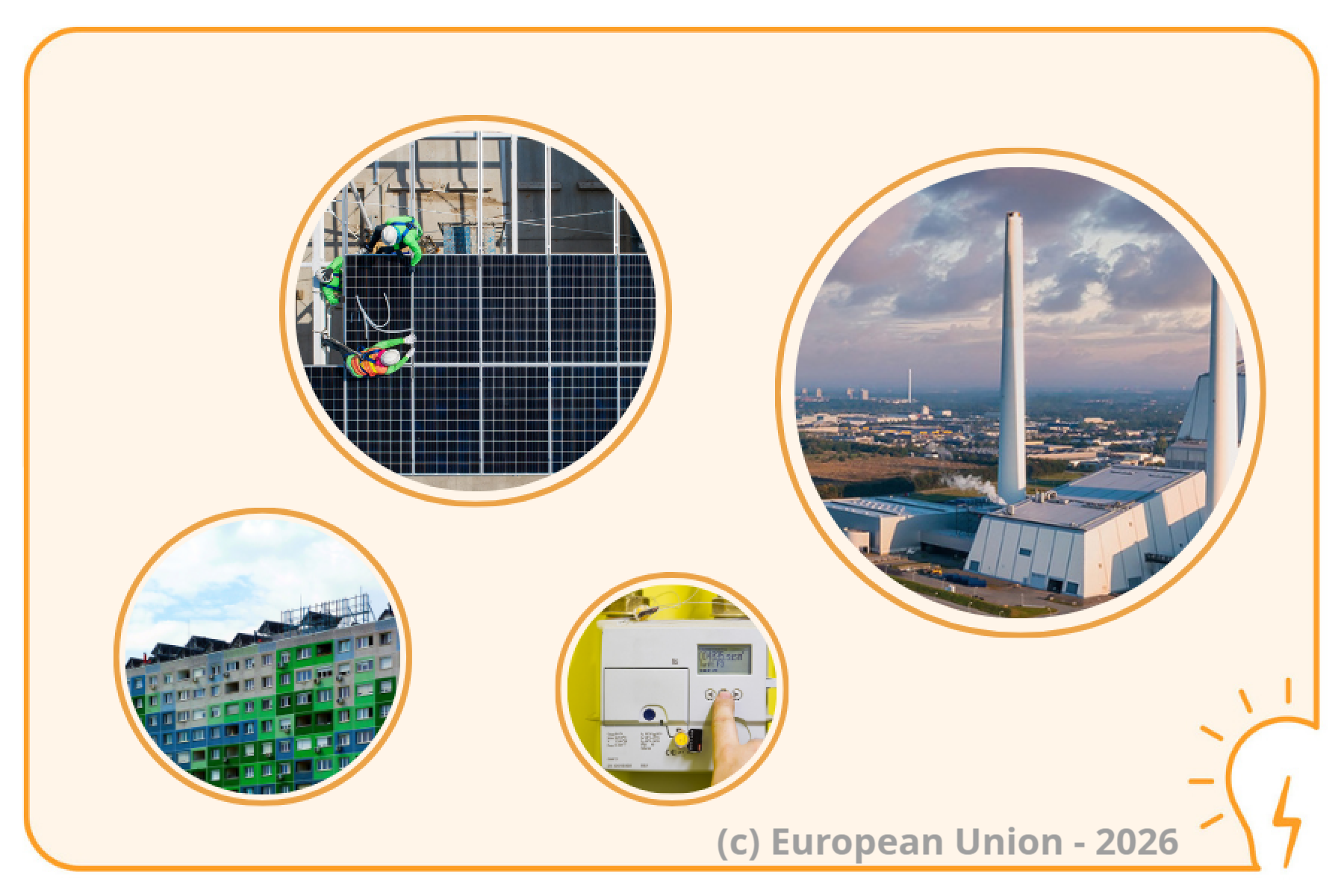
The actions from the AccelerateEU Catalogue, presented by the European Commission at an Informal Energy Council meeting on 13 May, are based on the most efficient measures taken by EU Member States since 2022 which have a large-scale replication potential across the EU. They focus on protecting consumers, promoting the clean energy transition, supporting energy savings, boosting domestic manufacturing capacity, and fostering energy efficiency. Specifically, they include demand-side measures such as rolling out smart meters, energy storage and smart grids, as well as introducing flexible contracts, dynamic pricing and rewards for consumption in off-peak times.
In addition, the European Commission recommends relying on timely, targeted, and temporary measures such as income support, social tariffs, and temporary support to energy-intensive industries, as well as incentives to save energy by subsidising public transport or shared mobility. The catalogue also lists facilitating switching providers and introducing bans on energy disconnections as important measures to support citizens during the crisis and beyond. Moreover, the Commission encourages the promotion of self-consumption and energy communities.
EU Member States should also remove barriers to the deployment of clean technologies, provide investment certainty, and promote fiscal and financial incentives to accelerate the uptake of clean and energy-efficient technologies such as PV panels, plug-in batteries, heat pumps and solar thermal solutions, while supporting sustainable transport and the modernisation of heating and cooling systems. In parallel, the Commission recommends eliminating preferential treatment for fossil fuels such as national subsidies and through fiscal reforms.
However, according to several trackers such as Bruegel’s 2026 European energy crisis fiscal response tracker, so far, a majority of funds is being spent on untargeted measures, such as general energy excise duty or VAT cuts, which lack both a clear target group or conditionality provisions. By early May, EU Member States had spent an estimated €11 billion in fiscal measures in response to the war, with Spain and Germany at the forefront, accounting for nearly 50% of the total sum. In addition, the large majority of measures have targeted fossil fuels or both fossil fuels and electricity, with only three out of 41 measures targeting exclusively electricity.
In this context, EERA remains committed to promoting the clean energy transition and the uptake of clean and energy-efficient technologies across the EU, while highlighting the key role research and innovation has to play in this endeavour.
Login as an EERA member
In case you are an EERA member and don’t have login details, please contact secretariat@eera-set.eu
Join EERA
You are not an EERA member yet? Then you are missing out on a lot!
EERA gathers the best energy researchers and infrastructures in the whole of Europe
EERA makes your voice heard in the political discussions at the European level
EERA offers great networking opportunities with peers from your discipline - and others