Middle East war fuels energy market volatility as US plans Iran port blockade, EU braces for economic fallout
Share this page
by Rosita Zilli, Policy Director, and Marianne Lazarovici, Policy Officer
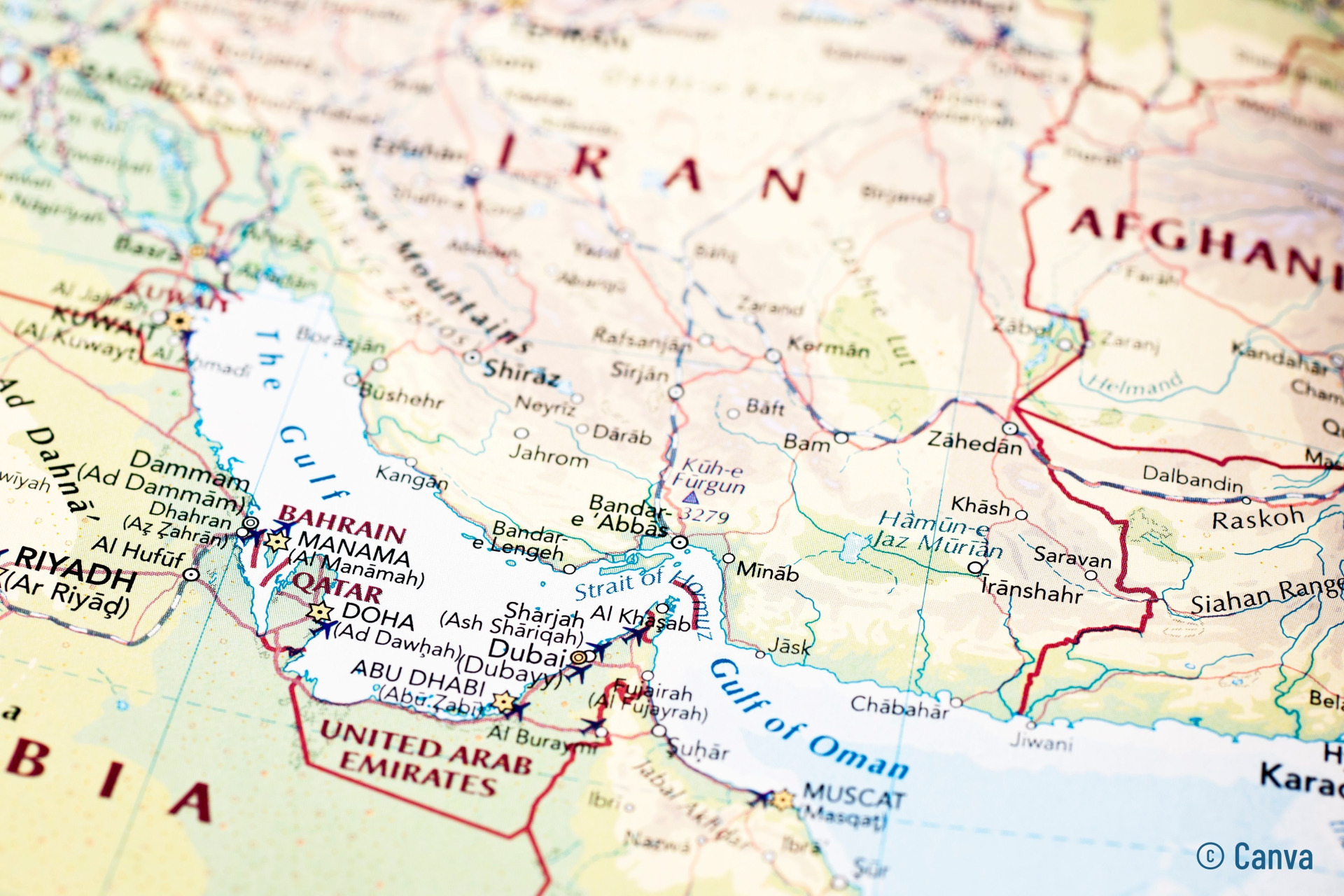
Since the United States and Israel launched their attacks on Iran on 28 February, global energy markets have gone up and down with each new development. Most recently, the US military said it would enforce a blockade on all traffic entering and leaving Iranian ports in the Strait of Hormuz from 10 a.m. Eastern Time (ET) – or 4 p.m. (CET) – from Monday 13 April onwards, after negotiations stalled over the weekend. This led Brent crude to rise more than 7% to $102 a barrel. However, the two-week ceasefire announced on Tuesday 7 April, hinging on the reopening of the Strait of Hormuz, through which 20% of the world’s gas and oil normally transit each day currently continues to hold. This temporary reprieve had led to Brent crude prices falling by 13%, at around $95 a barrel, in one of the biggest one-day drops in oil prices since the 1991 Gulf War. Following the collapse of the talks between the US and Iran, and the uncertainty surrounding the ceasefire, Europe continues to prepare for a longer-term economic shock.
The EU’s top economy official, Commissioner Valdis Dombrovskis, notably warned that the bloc still faced the threat of stagflation, while German Chancellor Friedrich Merz compared the oncoming crisis to the Covid pandemic and the start of the war in Ukraine. Despite the EU buying very little crude oil from the Gulf, it still relies heavily on the region, importing from there more than 40% of its refined products such as diesel and aviation fuel. Besides, observers fear that the rising prices may have repercussions across entire value chains, affecting the manufacturing sector, dealing with the surging costs of petroleum derivatives, including plastics and fertilisers.
Furthermore, the impact is certain to be felt by households too, with the European Trade Union Confederation (ETUC) notably reporting that a 50% average increase in energy costs this year would see the average EU household’s energy bill rise from €3,792 to €5,688, or about 12% of the total household expenditure. Six weeks into the war, the EU is already struggling to handle the rising fuel prices, with massive protests in Ireland, and several member states scrambling to introduce temporary relief measures, such as France, with a new loan programme for small businesses, and Italy cutting excise duty on fuel.
At an ad hoc meeting of the Oil Coordination Group held on 8 April, the European Commission confirmed that the EU’s executive is currently preparing a new Toolbox, requested last month by EU leaders, to fight soaring energy prices. Speaking to the Financial Times on Friday 3 April, EU Energy Commissioner Dan Jørgensen stated that the EU would assess all possibilities in that regard, including fuel rationing and releasing more oil from emergency reserves.
Against this backdrop, Germany, Italy, Spain, Portugal and Austria have asked the EU for a windfall tax on energy surplus profits accumulated as a result of rising fuel prices, in a letter addressed to EU Climate Commissioner Wopke Hoekstra. They argue such a measure, currently under consideration by the Commission, would ensure a fairer distribution of the burden. However, the Commission is unlikely to activate the so-called “general escape clause”, which would allow the EU to suspend the rules limiting Member States’ budget deficits to 3% of annual GDP.
Beyond Europe’s borders, South-East Asia and the Indian subcontinent stand amongst the most affected regions in the world. Before the war, Asian countries relied on the Gulf for about 80% of their gas and oil supplies. As another long-term implication of the conflict, they are now increasingly turning towards China to diversify their energy mix, as well as to import equipment and clean technologies.
In this volatile context, EERA will continue to firmly advocate for a swift and steady clean transition as the most reliable path to strengthening energy security, reducing external dependencies, and enhancing competitiveness while delivering on climate objectives, with low-carbon energy research and innovation at its core, enabling a resilient and future-proof European economy.
Login as an EERA member
In case you are an EERA member and don’t have login details, please contact secretariat@eera-set.eu
Join EERA
You are not an EERA member yet? Then you are missing out on a lot!
EERA gathers the best energy researchers and infrastructures in the whole of Europe
EERA makes your voice heard in the political discussions at the European level
EERA offers great networking opportunities with peers from your discipline - and others