Top story of the week: Competitiveness and energy security dominate EU priorities for 2026, with climate less visible and R&I selectively addressed
Share this page
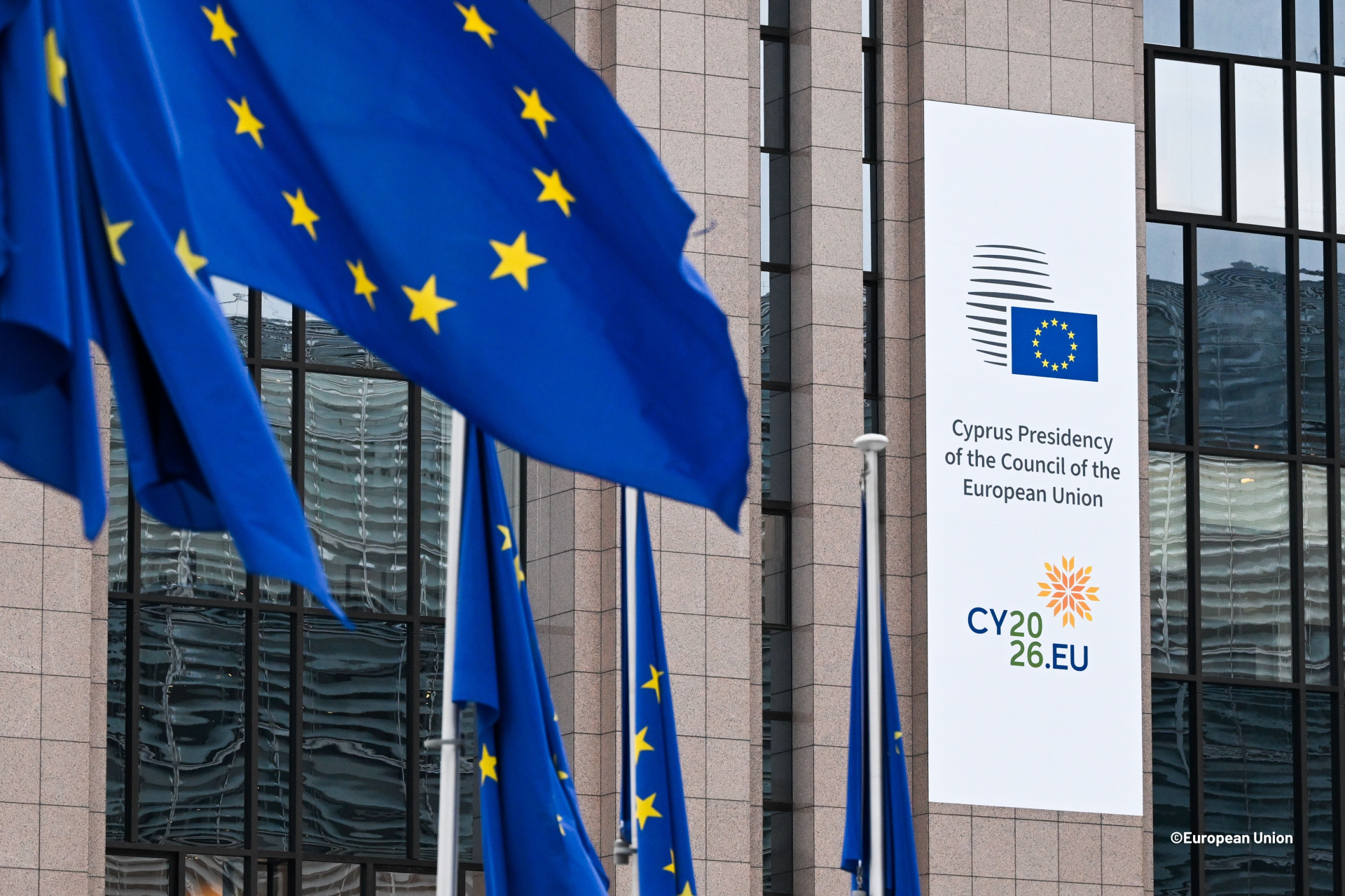
On 1 January 2026, Cyprus took over the rotating Presidency of the Council of the European Union from Denmark, a role it will hold for the next six months, before passing the baton to Ireland for the second part of the year. In parallel, the European Parliament, Council and Commission released an annual strategic document highlighting the “Joint legislative priorities of the EU Institutions for 2026”. Both the priorities and the programme presented by Cyprusfor its six-month stint at the helm of the Council intend to address mounting geopolitical instability and complexity through increased preparedness and autonomy.
In this context, the institutions’ joint legislative priorities notably underscore the importance of reaching a prompt agreement on the next Multiannual Financial Framework (MFF), the EU’s seven-year budget, and highlight the Union’s commitment to ensuring the EU's defence readiness by 2030, in a context characterised by a need for competitiveness and resilience. Besides, regulatory simplification, the protection of democratic values, and addressing migration are also hailed as central topics. Largely echoing these priorities, the programme of Cyprus’ Presidency presents a similar focus.
On the energy front, the joint legislative priorities reiterate the objective of eliminating Russian oil and gas from the EU’s energy mix, as well as the importance of bringing down energy prices, and of building a genuine Energy Union before 2030. In addition, the document pledges to focus on technological sovereignty and support investment in key technologies, partly in order to reduce the bloc’s strategic dependencies and strengthen its supply chains. Specifically, when it comes to legislation, the document precises that the three institutions pledge to prioritise about a dozen proposals, including the European grids package, an initiative intended to speed up the modernisation and expansion of the Union’s energy grids.
Similarly, accomplishing the clean energy transition to a sustainable, efficient and low-carbon system remains a central ambition of the Cyprus Presidency, which highlights energy price volatility, high costs and diversification of sources as key concerns, for industries and citizens alike. It thus proposes to focus on enhancing grid infrastructure, interconnections and energy storage, promoting citizen engagement, and investing in clean and breakthrough technologies. In addition, it will advance cross-regional connectivity through key energy corridors, and ensure the integration of the Single Market, vital to the EU’s energy transition. The Presidency’s programme also recalls the importance of securing critical raw materials and of reinforcing clean-tech supply chains. Specifically, Cyprus announced its intention to advance negotiations on a number of files such as the upcoming Industrial Accelerator Act, the Grid Package and the Energy Security Framework.
When it comes to research and innovation, the joint legislative priorities express the ambition of tackling bottlenecks and increasing their support to boost competitiveness, including for start-ups and scale-ups, notably by prioritising the 28th regime for innovative companies, a long-awaited additional legal framework for companies, coexisting with national law and offering a harmonised alternative at the EU level. No other upcoming legislative initiative or concerns expressed by the research and innovation community are mentioned throughout the document. Worse, research and innovation is not mentioned as a priority in the Cyprus Presidency’s general programme.
Still, when looking at the work Cyprus intends to achieve within the Competitiveness Council gathering Research Ministers, the Presidency pledges to promote a balanced and competitive European research and innovation framework fostering excellence and working towards closing innovation gaps. The Presidency will also aim to achieve progress on the negotiations for the Horizon Europe 2028-2034 programme, ensuring sufficient support for cutting-edge research, while simplifying funding instruments to maximise impact, and closing the gap from research to market-ready innovation. The European Innovation Act and the Fund for Coal and Steel revision are also cited as key pieces of legislation on which it will make progress.
Fighting climate change, however, is undoubtedly the issue that is poised to take the back seat this year. Irremediably absent from the joint legislative priorities, it only benefits from a short paragraph in Cyprus’ programme, which solely mentions the initiative on the reduction of CO₂ emissions from road transport, and an imprecise commitment to the implementation of the EU Green Deal as a whole. Nevertheless, the Presidency hints at making progress on the Environmental Omnibus Package, aimed at simplifying and EU environmental regulations, which many fear will undermine the implementation of the EU Green Deal. Overall, the climate and security nexus takes centre stage, with resilience and preparedness – notably through Water Resilience and Climate Adaptation files – gaining traction.
EERA, as the largest low-carbon energy research community in Europe, will continue to monitor developments forecast by both documents, and to carry the voice of its members to contribute to all relevant upcoming negotiations, starting with the Multiannual Financial Framework and Horizon Europe 2028-2034, to ensure science-based decision-making and the recognition of the key role of low-carbon energy research in fostering EU competitiveness.
Login as an EERA member
In case you are an EERA member and don’t have login details, please contact secretariat@eera-set.eu
Join EERA
You are not an EERA member yet? Then you are missing out on a lot!
EERA gathers the best energy researchers and infrastructures in the whole of Europe
EERA makes your voice heard in the political discussions at the European level
EERA offers great networking opportunities with peers from your discipline - and others