-
News
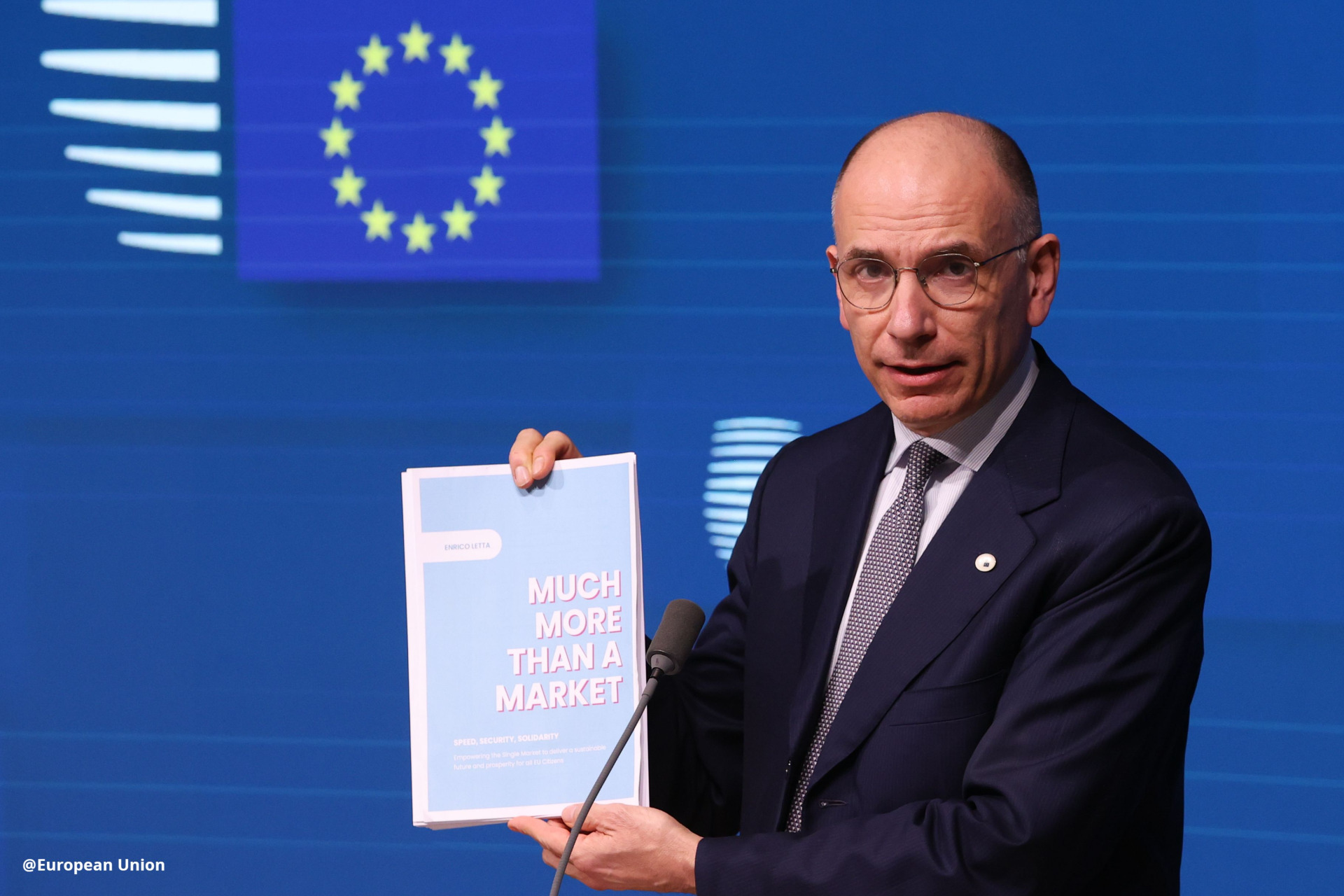
Top story of the week: Eagerly awaited Letta report places R&I and the clean energy transition at ...
22 April 2024On 18 April 2024, former Italian Prime Minister and President of the Jacques Delors Institut Enrico Letta unveiled his report on the future of the European Union’s Single Market during a European ...
More news -

News
Top story of the week: EU takes one more step towards Energy Charter Treaty exit
16 April 2024On 9 April 2024, the European Parliament Committees for Trade (INTA) and Energy (ITRE) voted in favour of a coordinated EU withdrawal from the Energy Charter Treaty (ECT). Signed in 1994 by 56 ...
More news -
Projects
RISEnergy | Research Infrastructure Services for Renewable Energy
01 March 2024The European Green Deal aims to transform the EU into a modern, resource-efficient and competitive economy with zero net greenhouse gas emissions by 2050. To achieve more efficient, competitive and ...
More projects
Our Joint Programmes
To organise work within the association and realise its strategy, EERA operates 18 joint research programmes.
-
 AMPEA
AMPEA
AMPEA
AMPEA
AMPEA stand for "Advanced Materials and Processes for Energy Applications". Its members work on basic materials science, physical chemistry of processes, heat and mass transfer phenomena, and develop powerful tools to characterise materials and energy devices.
-
 Bioenergy
Bioenergy
Bioenergy
The current generation of biomass conversion technologies is expensive and uses feedstock that is associated with sustainability issues. JP Bioenergy works on sustainable value chains, encompassing feedstock production, conversion technologies, stationary Bioenergy and integrated assessment.
-
 Carbon Capture and Storage
Carbon Capture and Storage
Carbon Capture and Storage
Carbon dioxide capture and storage (CCS) is a key element in decarbonising the power and energy-intensive industry sector and thus reducing anthropogenic CO2 emissions.
-
 clean Energy tranSition for Sustainable Society (e3s)
clean Energy tranSition for Sustainable Society (e3s)
clean Energy tranSition for Sustainable Society (e3s)
The Joint Programme clean Energy tranSition for Sustainable Society (e3s) sets out to understand the complex interactions in socio-technical-economic systems, which include, among other things, consumer behavior and engagement, market dynamics, collective action, innovation and technological change, and policy frameworks.
-
 Concentrated Solar Power
Concentrated Solar Power
Concentrated Solar Power
The Joint Programme contributes to achieving the following targets: support the STE industry; cluster European R&D activities on CSP/STE; define a priority of targets in each CSP/STE technology; increase the integration of CSP into the energy system; address all previous challenges in the context of aligned European and Member States Research and Innovation objectives.
-
 Digitalisation for Energy
Digitalisation for Energy
Digitalisation for Energy
The transversal Joint Programme (tJP) Digitalisation for Energy (DfE) aims to define key priorities for DfE that will derive in research activities as well as act as contact point with major European initiatives on supercomputing, big data, artificial intelligence, open science, etc.. The tJP DfE will also tackle the European Digital Strategy, which is strongly pushing the mentioned IT services.
-
 Energy Efficiency in Industrial Processes
-
 Energy Storage
Energy Storage
Energy Storage
The Joint Programme on Energy Storage strongly fosters the efficient development of new energy storage technologies. It supports the SET-Plan objectives and priorities by pooling and integrating activities and resources including international partners on all levels of the value chain.
-
 Energy Systems Integration
Energy Systems Integration
Energy Systems Integration
This Joint Programme in Energy Systems Integration seeks to bring together research strengths across Europe to optimize our energy system, in particular by benefiting from the synergies between heating, cooling, electricity, renewable energy and fuel pathways at all scales. The energy elements of the water and transport system are also included as is the enabling data and control network that enables the optimisation.
-
 Fuel Cells and Hydrogen
Fuel Cells and Hydrogen
Fuel Cells and Hydrogen
The Joint Programme on Fuel Cells and Hydrogen aims to accelerate and harmonise long-term research on fuel cells, electrolysers and hydrogen handling in Europe.
-
 Geothermal
Geothermal
Geothermal
EERA Geothermal has the potential to provide an outstanding contribution to the growth of geothermal energy utilisation in Europe and worldwide, bringing together all major European research organisations in a strategically oriented endeavour. The participants of EERA Geothermal are active in geothermal energy research ranging from low to high TRL and have active international collaboration across sectors.
-
 Hydropower
Hydropower
Hydropower
JP Hydropower spans the entire energy chain from water catchment to system integration, and it includes cross-cutting elements such as markets and market design as well as environmental impacts, effects of climate change and policy and societal issues.
-
 Nuclear Materials
Nuclear Materials
Nuclear Materials
The Joint Programme Nuclear Materials provides research and development for the structural and fuel materials needed for the development and implementation of advanced nuclear reactors in Europe.
-
 Ocean Energy
Ocean Energy
Ocean Energy
The Joint Programme Ocean Energy is based around six key research themes: resource; technology; deployment and operations; economics and costs; environmental and socio-economic impacts; education and training. These themes have been developed based on existing research roadmaps which identify the critical areas of research required for the successful growth of the industry.
-
 Photovoltaic Solar Energy
Photovoltaic Solar Energy
Photovoltaic Solar Energy
The objective of this Joint Programme is to accelerate the development of Photovoltaic Solar Energy to an energy technology that can be implemented at a very large scale through Joint Programming activities by key research institutes in Europe. It focuses primarily on cost reduction of PV systems, through enhancement of performance, development of low-cost, high-throughput manufacturing processes, and improvement of lifetime and reliability of PV systems and components.
-
 Smart Cities
Smart Cities
Smart Cities
The main objective of the Joint Programme Smart Cities is to develop strong research and innovation for smart planning, design and operation of urban energy systems, firmly integrated with cities’ social, cultural, innovation, economic, regulatory and legal perspectives, to achieve the SET-Plan highly ambitious target of developing 100 Smart Positive Energy Districts in Europe by 2025 (Action 3.2).
-
 Smart Grids
Smart Grids
Smart Grids
The Joint Programme Smart Grids, coordinated by RSE and ENEA from Italy by means of an extended cross-disciplinary cooperation involving many Research and Development (R&D) participants with different and complementary expertise and facilities, aims at addressing in a medium to long-term research perspective one of the most critical areas directly relating to the effective acceleration of smart grid development and deployment.
-
 Wind Energy
Wind Energy
Wind Energy
The Joint Programme on Wind Energy provides strategic leadership for medium to long-term research and supports the European wind energy industry and societal stakeholders. It brings together all public research organisations in Europe with substantial research and innovation efforts in wind energy.